
The 4-20 mA current loop is the workhorse signal used to carry sensor readings in industrial sites. It sends a small current that represents temperature, humidity, pressure, level, flow etc., and remains reliable even over long cable runs. Because the signal starts at 4 mA, a drop to 0 mA often indicates a fault, making faults easier to spot. The loop also handles electrical noise better than many voltage signals, works with most PLCs and older controllers, and is widely supported across brands. This guide explains why 4-20 mA remains the industry standard.

A current loop is a simple circuit where a transmitter controls the current flowing through two wires.
A PLC, controller, or monitoring system reads the current and converts it into a real value you can use, such as bar, degrees, metres, or litres per minute.
In most setups:
Values between 4 and 20 mA change linearly, making setup and checking easier.
In a 4-20 mA loop, 4 mA represents the minimum or zero value, not 0 mA.
This matters because a really low reading still sends a valid signal. If the loop drops below 4 mA, especially to 0 mA, it usually points to a problem such as:
This helps teams quickly distinguish between a true reading and a system fault.
Many transmitters can also flag issues by moving outside the normal 4-20 mA band.
In practice:
Some devices use set points like 3.6 mA and 21-22 mA, depending on settings. The key point is that unusual readings are easier to detect and alarm on.
Long cable runs can cause issues for voltage signals because voltage can drop across the cable.
A current loop performs better over distance because the controller measures current. As long as the power supply provides sufficient voltage to drive the loop, the signal remains stable despite wiring resistance. This helps preserve accuracy when sensors are installed far from the control panel.
Industrial sites often have interference from motors, drives, welders, and switching equipment.
A current loop signal is usually less affected by this interference than low-level voltage signals. This helps reduce unstable readings, spikes, and false alarms in real operating conditions.
The 4-20 mA standard has been used for decades, so many older systems support it. Most modern PLCs and monitoring systems also accept it.
It integrates easily with:
This makes upgrades easier because you can often replace instruments without changing the whole control setup.
Because 4-20 mA is widely used, devices from different manufacturers can usually work together without special converters.
This also makes maintenance easier. Replacement parts are easier to source, and technicians are more likely to know the wiring and testing methods already.
Many 4-20 mA transmitters are loop-powered, meaning the same two wires carry both the signal and power to the device.
This reduces the need for additional power cabling, shortens installation time, and lowers the risk of connection points failing. It is especially useful for remote instruments.
A practical note. Loop-powered devices have limited available power, so some instruments still need separate power. The loop-powered option is common, but not universal.
4-20 mA signals are linear, which makes them easy to scale in a PLC and reliable for control decisions.
In most systems:
Example: If a sensor range is 0-10 bar:
This consistency helps ensure that logic, alarms, and reporting remain accurate.
4-20 mA signals are linear, which makes them easy to scale in a PLC and reliable for control decisions.
In most systems:
Example: If a sensor range is 0-10 bar:
This consistency helps ensure that logic, alarms, and reporting remain accurate.

4-20 mA loops are simple to check with basic tools.
Technicians can measure loop current with a meter to confirm the signal is healthy. They can also use a loop calibrator to simulate 4 mA, 12 mA, and 20 mA during commissioning. This helps confirm wiring, PLC scaling, and alarm limits before the system goes live.
Many industrial sites add isolators or barriers between field devices and control panels.
These devices help protect PLC inputs and reduce grounding-related issues, especially across large sites. 4-20 mA works well with these components, which support stable readings and safer installations.
Because 4-20 mA is widely understood, it supports faster setup, clearer documentation, and easier staff training.
It also suits staged upgrades, where you replace one device at a time without changing the whole signal method. This reduces risk and downtime throughout the plant’s life.
The 4-20 mA current loop remains popular because it is reliable under real industrial conditions. It helps separate true readings from faults, stays stable over long cable runs, and handles electrical noise well. It also works with most PLCs and older control gear, supports simpler wiring with loop-powered devices, and is easy to scale, test, and maintain. For many industrial sites using modern industrial sensors and monitoring equipment, it remains one of the most practical ways to move sensor data from the field to the control room.
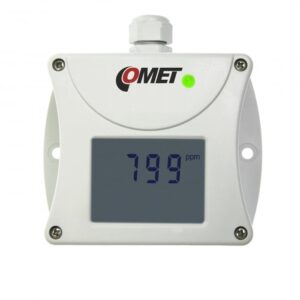
CO2 concentration transmitter with 4-2…
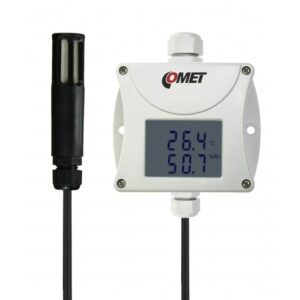
Humidity, temperature transmitter. Outdoor, indoo…

Temperature transmitter with 4-20mA output
…
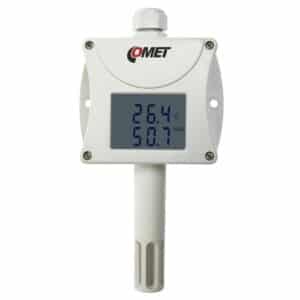
Temperature and humidity outdoor, indoor probe wi…
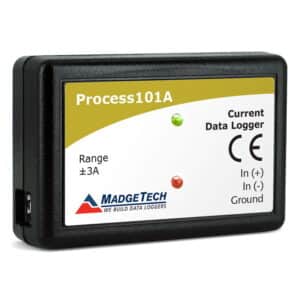
Compact, low level DC current data logger, Availa…
